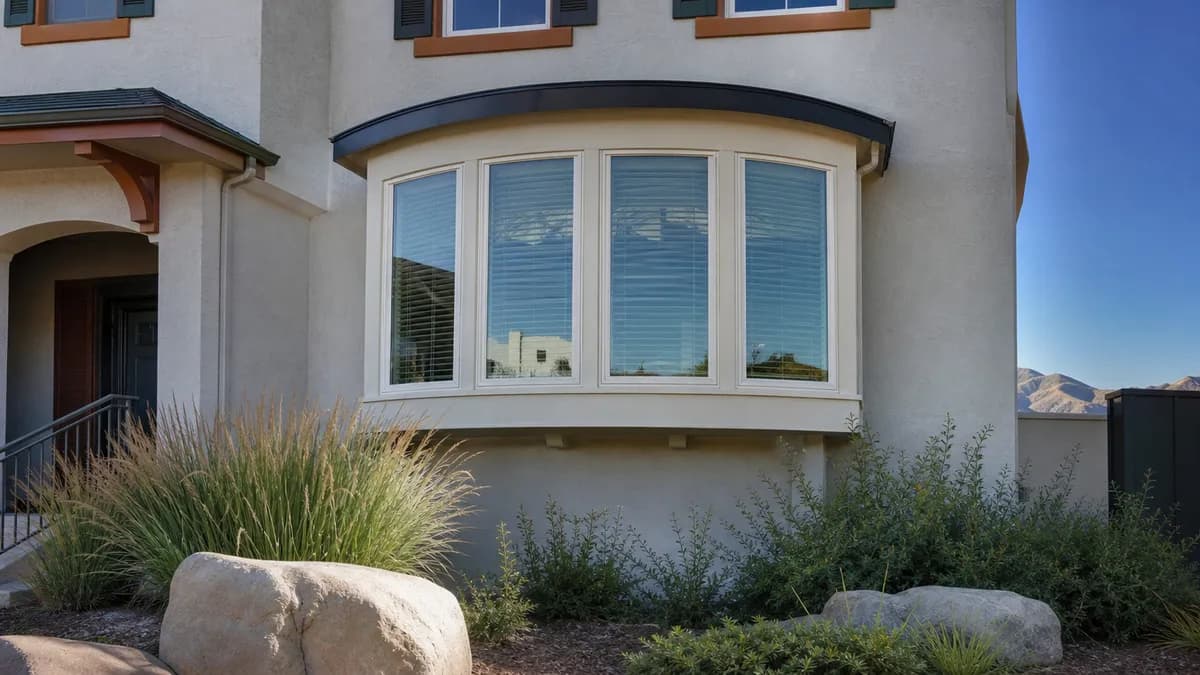
Bay, bow and garden windows: how they differ
| Type | Shape | Typical makeup | National range |
|---|---|---|---|
| Bay | Angular, three sides | Large center window with two angled side windows | $900–$4,500 (Fixr), $910–$7,100 (HomeAdvisor), $2,000–$6,000 (HomeGuide) |
| Bow | Gentle curve | Four, five or six equal panels | $1,500–$8,000 (Fixr), $1,500–$6,500 (HomeAdvisor), $3,000–$8,000+ (HomeGuide) |
| Garden | Small box projecting out | Glass roof and sides with a shelf | $1,000–$4,000 (HomeGuide) |
A bay window has a flat center pane and two side panes set at an angle, typically 30 or 45 degrees. A bow window curves in a shallow arc with more, narrower panels, so it gives a softer shape and a wider view. A garden window is a small glass box that projects from the wall with a shelf for plants or kitchen herbs, usually over a sink.
Ranges are national cost-guide figures, not Reno quotes, and the three guides disagree because they define the job differently. A bay or bow is priced as a unit, including the seat board, roof and support, so expect an itemized quote.
Where they suit Reno homes
Bays and bows suit dining rooms, kitchen nooks, primary bedrooms and living rooms on the front or side of a house. They are less common on stucco ranch homes built with flat walls, so adding one to a house that never had one is a structural project, not a swap. Garden windows suit kitchens where a flat sill is limited.
Replacing an existing bay or bow
Replacing a like-for-like unit in an existing opening is the lower-risk route. The installer checks the seat board, the roof flashing and the support cables or brackets for rot and sag. Adding a bay where there was a flat window means a larger rough opening, a new header and a different permit path.
Frames, panels and glass
A bay or bow is usually a combination of fixed center and operable side windows. Casement or double-hung side units give ventilation; a fixed center keeps cost down and maximizes view. See casement windows, double-hung windows and picture windows for how each behaves in the assembly.
Frame material
Vinyl is the cost leader; see vinyl windows. Fiberglass holds shape through Reno's 33.5°F July swing and about 122 freezing days a year; see fiberglass windows. Wood gives a stained interior sill and seat; see wood windows. A heavy bow is a lot of glass in one frame, so frame stability matters.
Glass and energy
More glass surface and more joints mean more potential heat loss and gain than a flat wall. The City of Reno's minimum is U-0.30. ENERGY STAR v7.0 Northern criteria are U 0.22 or lower with SHGC 0.17 or higher, or equivalents such as U 0.25 to 0.26 with SHGC at least 0.40. Ask for the whole-unit NFRC label, plus how the roof and seat are insulated. The roof and sides are where bays often lose the most heat. See energy efficient windows.
Structure, weight and permits
Support
A bay or bow extends beyond the wall and hangs its weight on the wall, support brackets or cables, or a knee brace. Ask how the unit is supported and whether the rough opening needs a new header. These are structural details a licensed installer should specify in writing.
Permits
Unincorporated Washoe County exempts door and window replacement in the same opening and size when it meets code. A bay or bow that projects farther or enlarges the opening is not the same size, and falls outside that exemption. The City of Reno lists window replacement on its EZ Permit sheet with a 0.30 U-factor and labels at inspection, so treat Reno as permit-required and have the installer confirm and pull it. Sparks and Carson City rules are unconfirmed: confirm with the building department or the installer.
Safety glazing and fire rules
Bay and bow panes that sit low to the floor, next to a door, or near a tub or stairs fall under IRC hazardous-location rules and need tempered glass. Washoe's WUI guide requires exterior windows to be tempered, dual or triple-glazed insulating units, glass block, or 20-minute fire-resistive, and the replacement must keep the home's ignition-resistance level. Confirm with the fire district in foothill areas.
Bay and bow window cost
Cost depends on size, panel count, frame, glass package and whether the seat, roof and trim are included. Labor for a bay or bow can run up to $800 according to Fixr. Other factors are second-floor access, stucco repair around a projecting unit, and the permit. See window replacement cost in Reno for how each factor moves a quote.
| Item | National range | Source |
|---|---|---|
| Bay window, installed | $900–$4,500 | Fixr |
| Bay window, installed | $910–$7,100 | HomeAdvisor |
| Bow window, installed | $1,500–$8,000 | Fixr |
| Bow window, installed | $1,500–$6,500 | HomeAdvisor |
| Garden window, installed | $1,000–$4,000 | HomeGuide (snippet) |
| Labor for bay/bow, upper end | Up to $800 | Fixr |
How to pick
- Bay: more floor-seat depth and a crisp angular look.
- Bow: a wider, gentler view and a softer front elevation.
- Garden window: a plant shelf over a kitchen sink without a large project.
- Operable panels: casement sides for airflow, fixed center for view and cost.
- Support and insulation: get both described in the quote.
- Scope: old unit removal, stucco and interior trim repair, and permit included in writing.
Reno Vista Windows does not sell or install windows. Request a match and we connect you with licensed installers who can measure, quote and handle the permit.
Main guide: window replacement in Reno, NV.